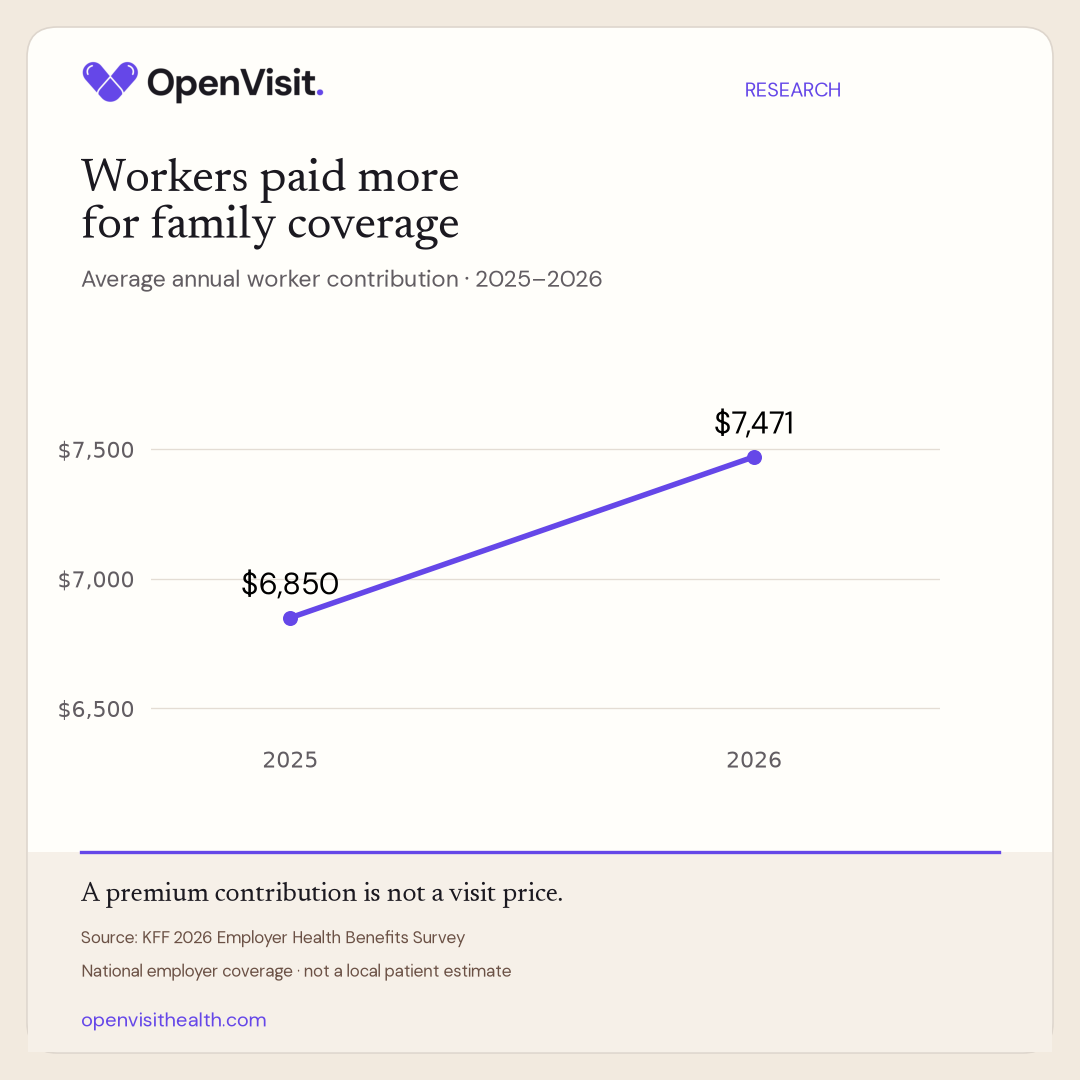
KFF’s 2026 employer survey puts the average worker contribution for family coverage at $7,471 a year, up from $6,850. For primary-care practices, the useful response is to explain what an appointment costs—not assume insurance has made it affordable. For DPC practices, explain what membership adds and what it leaves outside the monthly fee.
What the finding measures
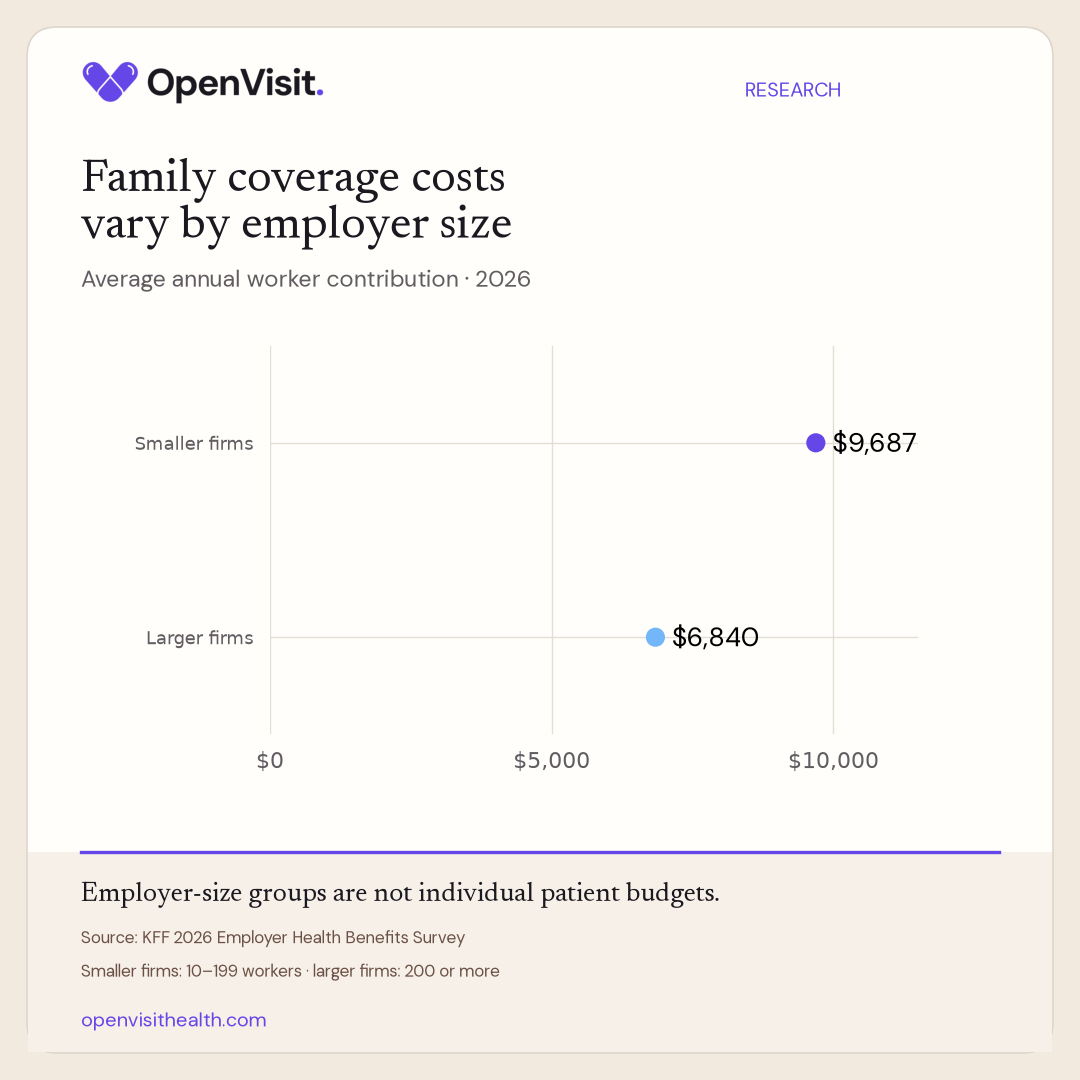
This is a national survey of employer coverage, not a study of the patients in your waiting room. The worker contribution is the part paid toward keeping family insurance in force. It is not a deductible, a visit charge or a measurement of primary-care spending. The report also shows substantial differences by employer size. Treat those differences as context for better questions, not a way to assign an insurance budget to an individual patient.
For an insurance-based primary-care practice
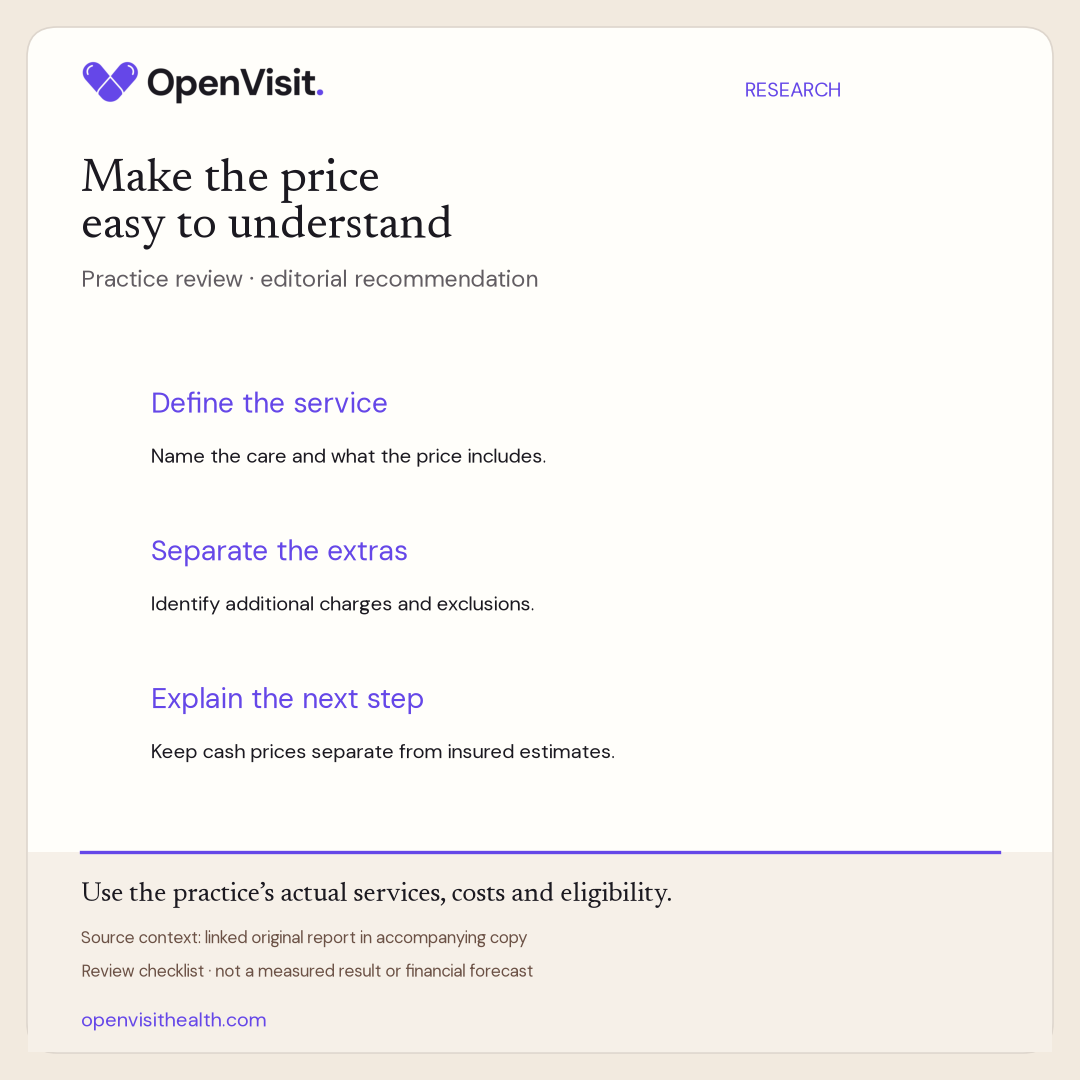
A patient can have coverage and still need help understanding a quote. Give the patient a defined service, explain which parts of the visit are included and identify tests or follow-up that may cost extra. When benefits have not been checked, say so. A practice-published self-pay fee and a patient’s insured responsibility answer different questions; neither should be presented as the other.
For DPC and hybrid practices
Make the membership boundary easy to see. List the recurring charge, which primary-care services it covers, how access works and which services are billed separately. Explain how patients arrange hospital, specialist and other care outside the membership. A person considering a membership needs to understand the combined commitment, rather than compare a monthly fee with a family insurance premium as if the two bought the same protection.
A useful change to make this week
Review the first price explanation a prospective patient sees. Could someone identify the service, included care, additional fees and next step without calling to translate it? If not, rewrite that explanation. Ask staff which cost questions recur, then use those questions to improve the page. Keep the answers tied to the practice’s actual offering rather than a national average.
What this does not establish
The survey does not show that patients will leave insurance, join DPC or choose a particular cash-pay practice. It cannot establish a conversion uplift for OpenVisit. Its value here is more modest: it gives a credible reason to make the distinction between paying for coverage and paying for a service clear. The practical recommendations are OpenVisit’s interpretation, not outcomes measured by KFF.
Chart definitions: Worker contribution means the amount a covered worker pays toward the premium for family insurance, per year. It excludes the employer’s share and is not a deductible or visit charge. Smaller firms have 10–199 workers; larger firms have at least 200. These are national averages, not individual patient budgets.