CMS’s 2027 outpatient fact sheet removes 637 services from the Inpatient Only list, allowing hospital outpatient payment when clinically appropriate. For surgical practices, that is a reason to review where care can be delivered and what the complete quote includes. Separate imaging changes apply only to specified services and eligible hospital departments.
The setting is part of the comparison
An independent imaging center, a hospital campus and an off-campus hospital department are not interchangeable descriptions. A patient may not know which type of location appears on the estimate. Ask for that detail explicitly, along with the service and whether the quote includes the professional interpretation and facility components. Only then can the team check whether the specific policy applies.
The surgical list change has a defined scope
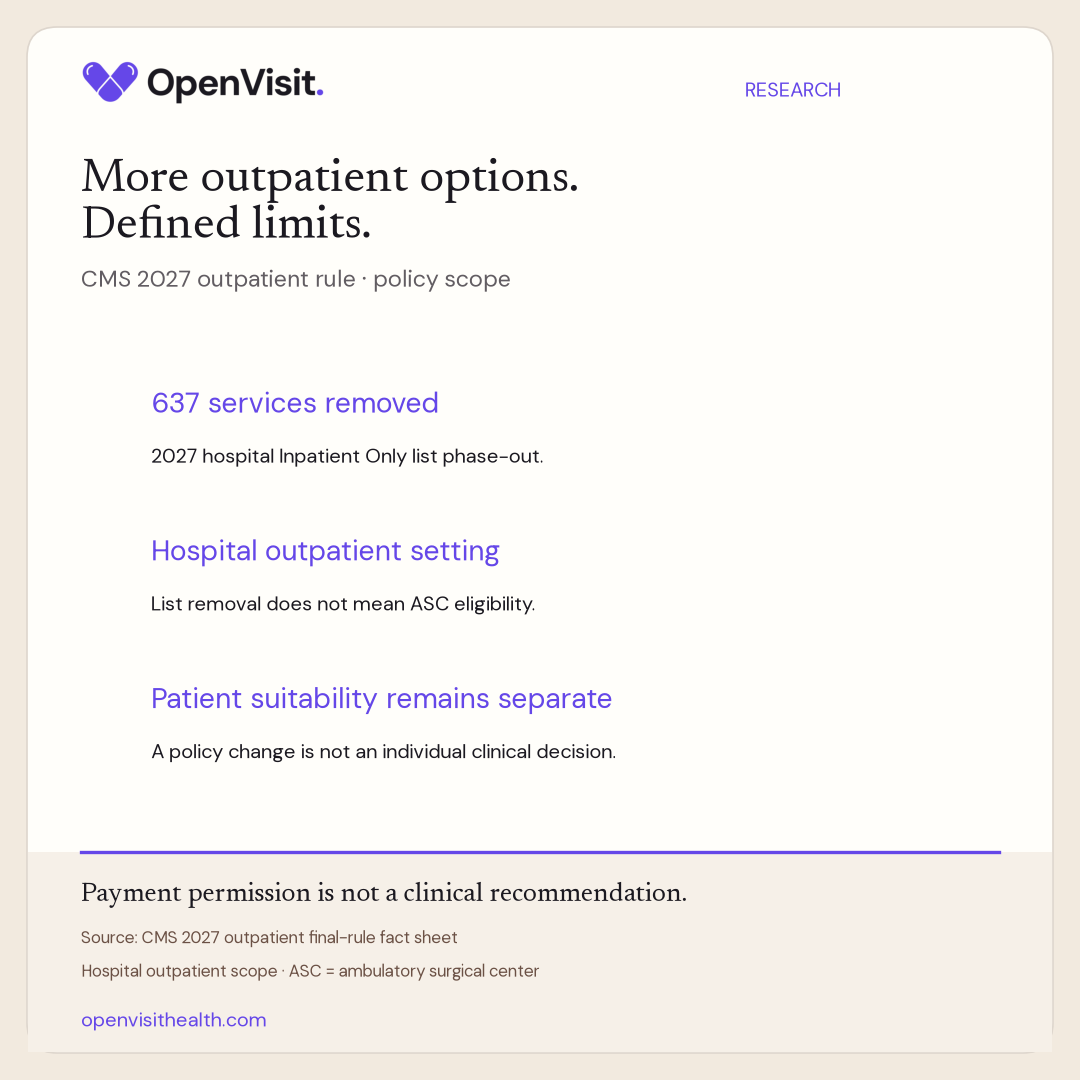
CMS’s detailed fact sheet says 637 services are being removed from the Inpatient Only list for 2027 as the phase-out continues. That allows Medicare payment in the hospital outpatient setting when clinically appropriate. It is not a statement that every removed procedure belongs in an ambulatory surgical center or that every patient is suitable for outpatient care. Keep the relevant list, setting and clinical decision distinct.
More outpatient options are not a recommendation for every patient
CMS’s announcement also describes a continuing expansion of outpatient surgical options. That is a policy change, not a clinical determination that a particular person should have surgery in one setting. For a practice explaining options, keep clinical suitability separate from the cost comparison. A lower facility amount is not useful if the quotation leaves out an essential component or the setting is not appropriate.
For a surgical practice
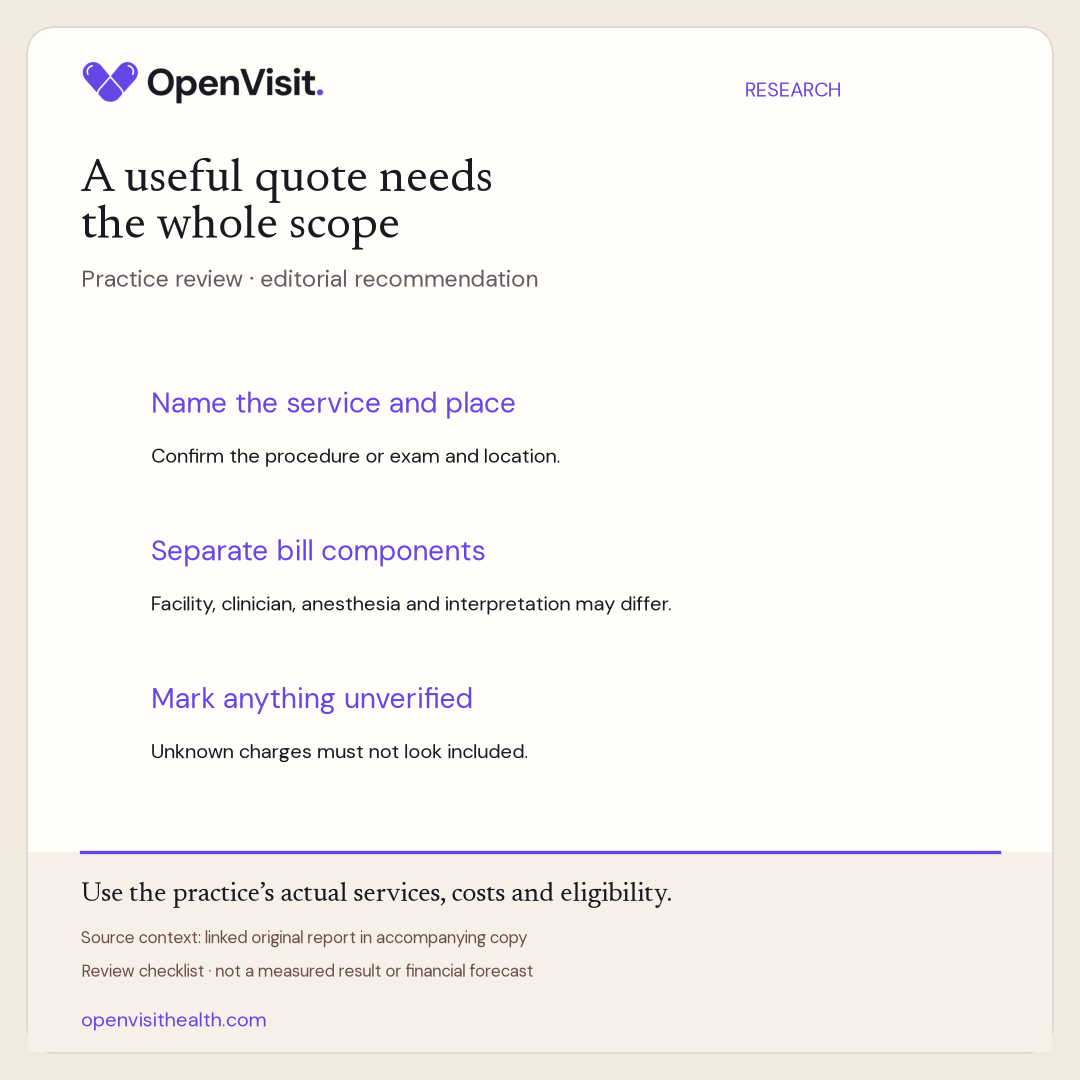
When a patient asks about price, identify the planned procedure, setting and what each party bills. Keep the surgeon’s professional fee separate from anesthesia, facility charges and other services unless the package explicitly includes them. Ask the relevant organizations to confirm the scope of their estimates. A single low number should not be presented as a complete episode price when the remaining charges are unknown.
For an imaging practice
Use a defined exam and the relevant contrast status. Clarify whether the quoted amount includes the scan and its interpretation, and whether the plan or cash-pay pathway is being discussed. Do not translate a national policy announcement into a promised local savings amount without checking the actual estimate and applicable benefits.
For patient-facing pages
A useful price page names the service and location, lists included components and calls out likely additional charges. If the practice cannot verify a component, label it as something to confirm rather than imply it is included. That makes the page useful even when it cannot produce a final insured out-of-pocket estimate.
How to use this news
Treat the rule as a prompt to improve the comparison, not a universal cheaper-care claim. Build a short list of the services and locations the practice actually uses; ask the billing team which provisions apply; then revise the patient explanation. The policy source is CMS. The quotation checklist and communication recommendations are OpenVisit’s interpretation, not measured savings for a patient or an endorsement of a care setting.
Chart definitions: The Inpatient Only list identifies services Medicare generally restricts to inpatient payment. Removal permits payment in the hospital outpatient setting when appropriate; it does not automatically establish ambulatory surgical center eligibility or patient suitability. A complete quote identifies its separately billed components; it is not just the lowest facility amount.